




Shaped by History and Design: The Gardens of Los Poblanos
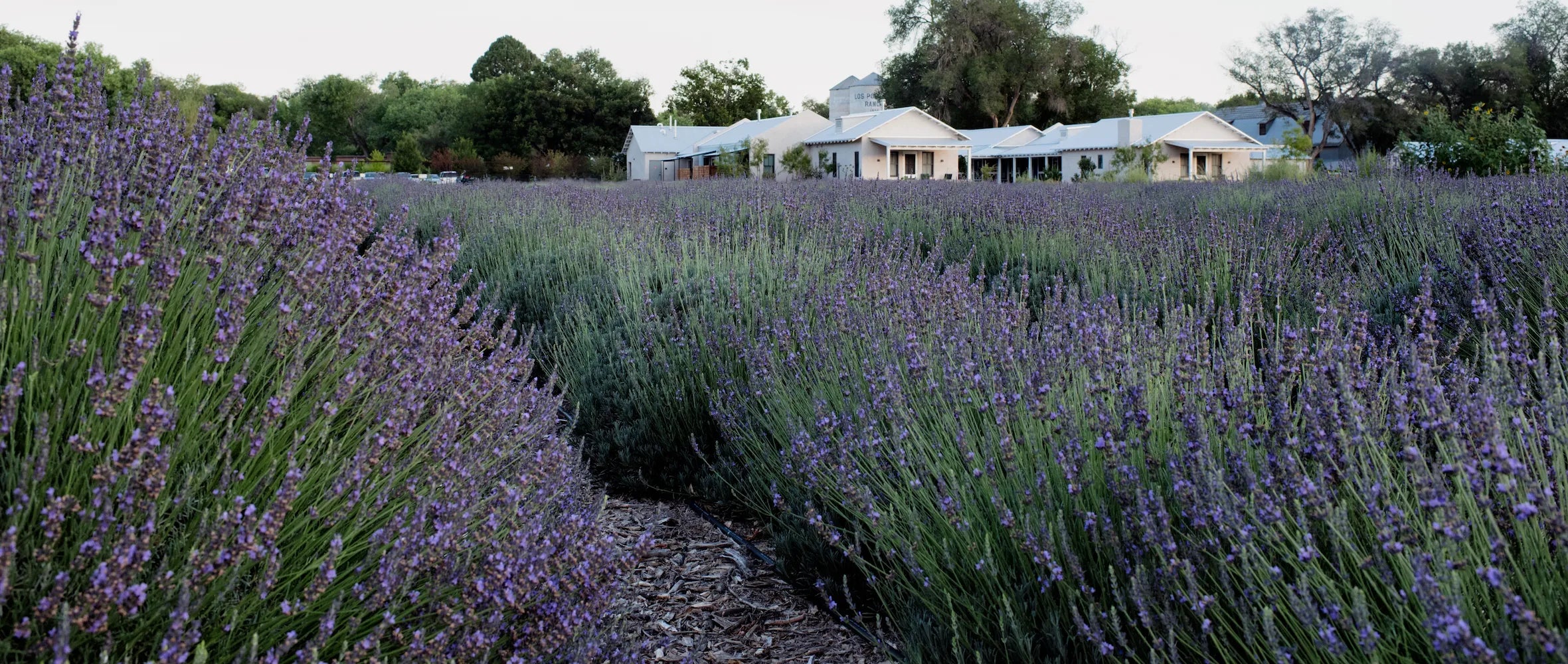
If you've ever walked the paths at Los Poblanos and felt that something here runs deeper than what you can see, the cottonwoods, the acequias, the lavender fields, and the stone-walled courtyards carry the weight of something older than the inn itself, you're not imagining it.
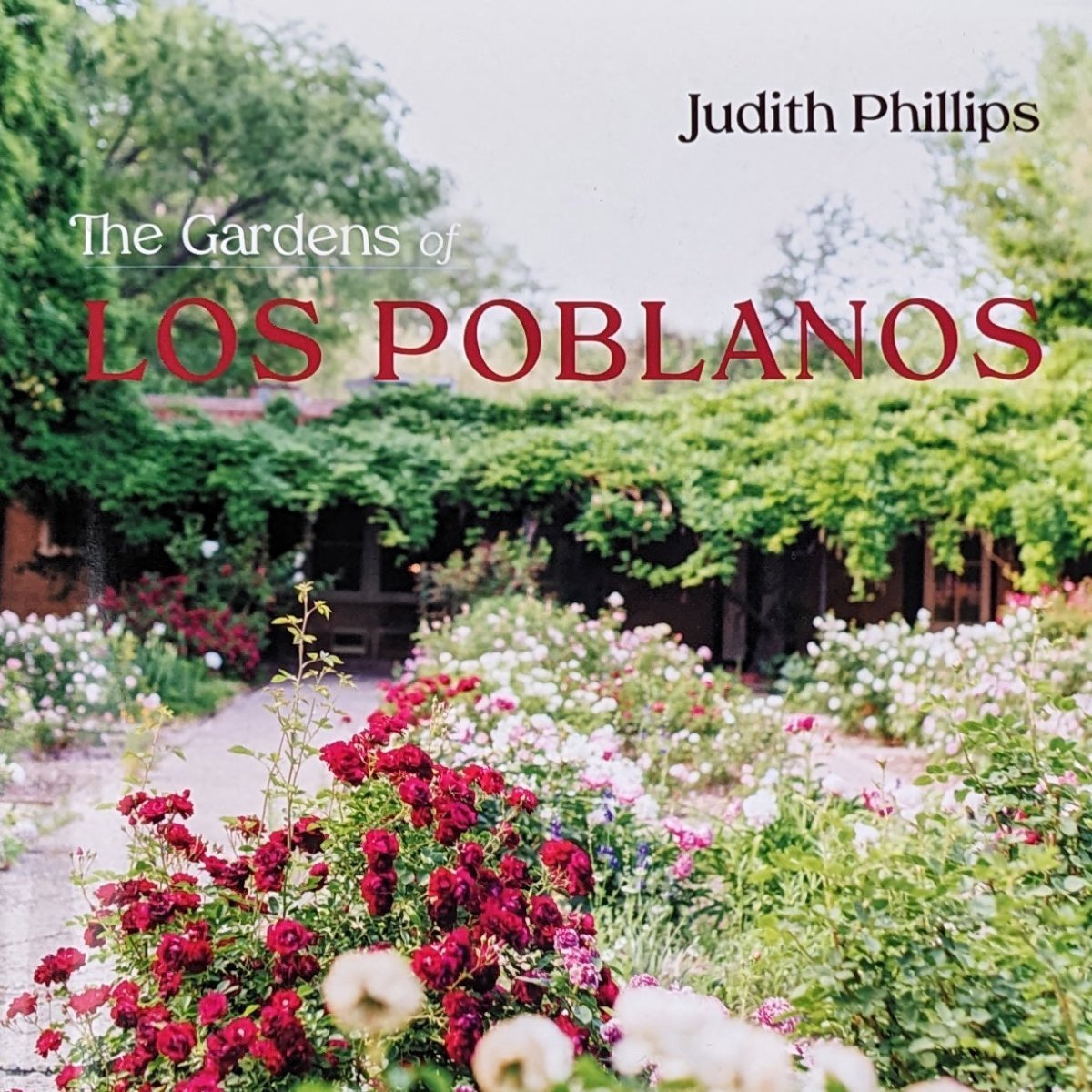
Set in the heart of New Mexico’s Rio Grande Valley, Los Poblanos is a place where land, culture and creativity have long been intertwined. In The Gardens of Los Poblanos, landscape designer and garden writer Judith Phillips offers a thoughtful exploration of this remarkable property, tracing its evolution while exploring the intention behind its landscapes today.
Judith Phillips has been a landscape designer, garden writer, teacher and activist in New Mexico for over 30 years. She is, as Los Poblanos executive director Matt Rembe describes her in the book's foreword, "the Southwest's foremost expert on plants." Over decades of work at Los Poblanos, first as the landscape planner who helped guide the Rembe family's preservation vision, then as the author who agreed to document what they'd built together, she brings a depth of knowledge that no one else could. As Matt writes, "the work was much more challenging and complex than any of us thought, and twenty years later, Judith is the only person with the knowledge, expertise, and stamina to write this thorough history."
Ten Thousand Years in Twenty-Five Acres
The book opens not in 1932, when Ruth Simms and architect John Gaw Meem began transforming the old Armijo farmhouse into the hacienda we know today, but in 8000 BCE. Radiocarbon-dated campfire remains tell us that people were already living and foraging in the Rio Grande watershed that long ago. By 1000 BCE, early Puebloans were cultivating maize, squash, and beans in these very floodplains, growing them not as monocultures, but interplanted with native species like Rocky Mountain bee plant, gathered wild amaranth, and native tobacco used in ceremonies to petition rain.
This is the foundation Phillips builds from: a landscape shaped by the Tiguex peoples and their descendants, the present-day Isleta and Sandia Puebloans; altered and expanded by Spanish colonial acequia irrigation; stressed by the railroad era's clear-cutting of the cottonwood bosque; and eventually, in 1932, entrusted to two visionary women who would leave their permanent mark.

A Salt Cedar next to La Quinta designed by John Gaw Meem, left photo by Laura Gilpin circa 1930
Ruth Simms, Rose Greely, and the Country Place Era
The book paints a portrait of the collaboration between Ruth Simms, early suffragist, newspaper publisher, congresswoman and rancher, and Rose Greely, one of the first women licensed as both an architect and landscape architect in the United States. Their partnership produced the gardens we still walk through today.
Greely's approach was revolutionary for its time and its place. On the East Coast she had designed beaux arts gardens of formal symmetry; at Los Poblanos she freely combined that tradition with arts and crafts regionalism, placing the highest-water-use planting near the buildings and transitioning naturally to drought-adapted native species at the edges. Phillips notes that this approach actually anticipated the "xeriscape" movement by fifty years. Greely also understood that Los Poblanos required asymmetrical balance, which is easier to maintain in an erratic desert climate, and she wrote about in a series of articles for House Beautiful around the very time she was designing these gardens.
The result: the formal west garden now known as the Rose Greely Garden, with its rill running down the central cross-axis, its clay roof tile–bordered parterre beds, and the pebble mosaics by New Mexican folk artist "Pop" Shaffer.
A Family's Querencia
Phillips introduces the Spanish concept of querencia early and returns to it often: the feeling of deep belonging to a place, of finding one's safe haven and identity in it. It is, she suggests, the word that best explains Los Poblanos, and why the Rembe family has devoted itself so completely to this land, and why guests from around the world keep finding their way here.
The book traces the Rembe family's stewardship through the second half of the twentieth century and into the present, culminating in the development of a preservation plan that would become the blueprint for modern Los Poblanos: more than half the property placed in permanent agricultural trust, the historic buildings carefully restored and expanded in the spirit of Meem's original work, and a mission statement that reads, in part, "to preserve the historic Los Poblanos Ranch by cultivating a dynamic business dedicated to regenerative agriculture, hospitality, historic preservation, and community."

Gardens as Living History
What makes Phillips's book essential reading — not just for garden history enthusiasts but for anyone who has spent time here — is her insistence that the gardens are not backdrop. They are the story. As she writes: "Although much has been written about the architecture of Los Poblanos, very little has been documented about the gardens. Even early photographs focus on the buildings, with only passing glimpses of the surrounding landscape."
She corrects that oversight across seven chapters and nearly a century of landscape evolution, tracing the changes driven by climate, culture, and the growing understanding that a garden's resilience depends on working with its place, not against it. She shows how plants selected for their relationship to the Rio Grande watershed — native cottonwoods, lavender adapted to arid soils, heritage fruit trees, herbs that also fill the kitchen — are not just aesthetically right. They are historically right.
The Gardens of Los Poblanos belongs on the shelf of anyone who loves this place and wants to understand it more deeply.